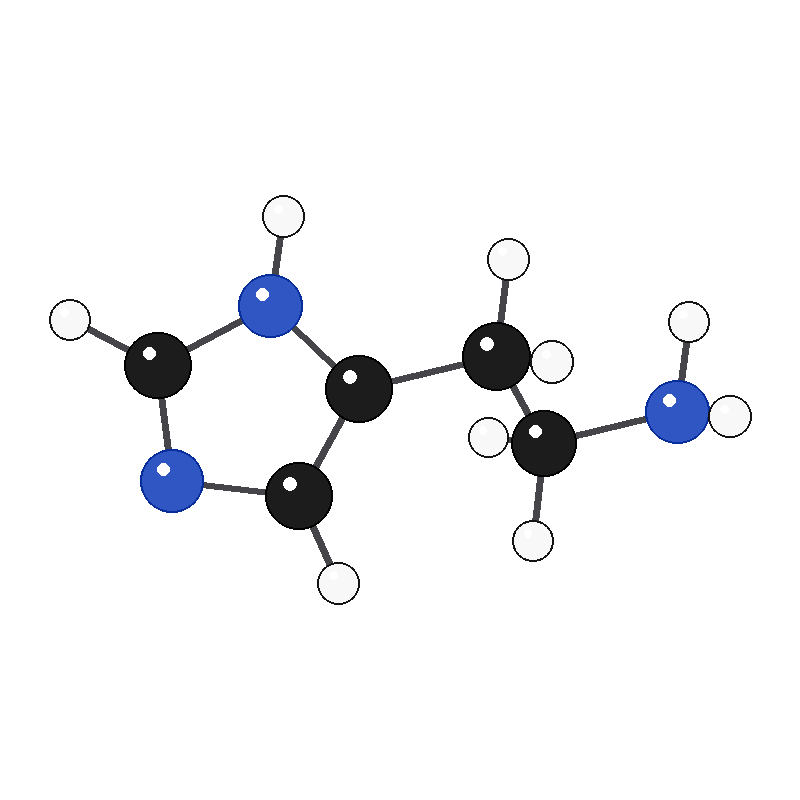
Shown: histamine, a minor component of bee venom. This is not melittin, the main peptide, and not the venom mixture.
Ingredient
Bee Venom
Bee venom is an emerging “natural toxin” cosmetic active associated with anti-aging, skin rejuvenation, antibacterial and anti-inflammatory benefits. Recent research continues to focus on standardization, melittin content and safer cosmetic applications.
Bee venom is an emerging “natural toxin” cosmetic active associated with anti-aging, skin rejuvenation, antibacterial and anti-inflammatory benefits. Recent research continues to focus on standardization, melittin content and safer cosmetic applications.
Trend evidence
Hot / Emerging Ingredient. Human research has reported improvement in facial wrinkles after bee-venom serum use, while research also supports antibacterial and anti-acne potential. However, bee venom can cause irritation and serious allergic reactions, including anaphylaxis, so safety and standardization are critical.
What it does
Anti-aging / wrinkle reduction; skin rejuvenation; antibacterial / anti-acne; anti-inflammatory; supports skin repair; may support collagen and elasticity; antioxidant activity.
Notes
Biological / industrial source: Venom collected from honeybees, primarily Apis mellifera. It contains peptides, enzymes, lipids and bioactive amines, with melittin being the major peptide component.
R&D / ingredient: Purified / standardized Bee Venom; research focuses on melittin standardization, PLA2-free bee venom and controlled cosmetic delivery.
Developer / supplier: Various bee-venom cosmetic ingredient suppliers, particularly in South Korea, China and other East Asian markets.
Origin: South Korea / China / Japan / Global.
Representative product: Bee Venom Serum / Bee Venom Anti-Aging Cream.
Approx. retail price: US$20–100+.
Evidence maturity: Medium.
Publishing notes: Hot / Emerging Ingredient. Safety and standardization are critical due to irritation and allergy risk including anaphylaxis.