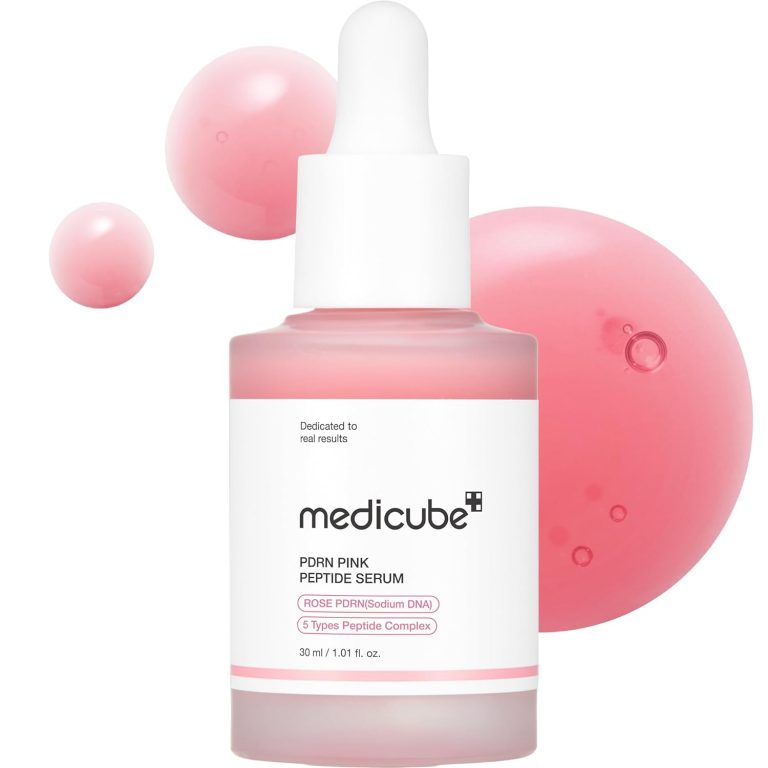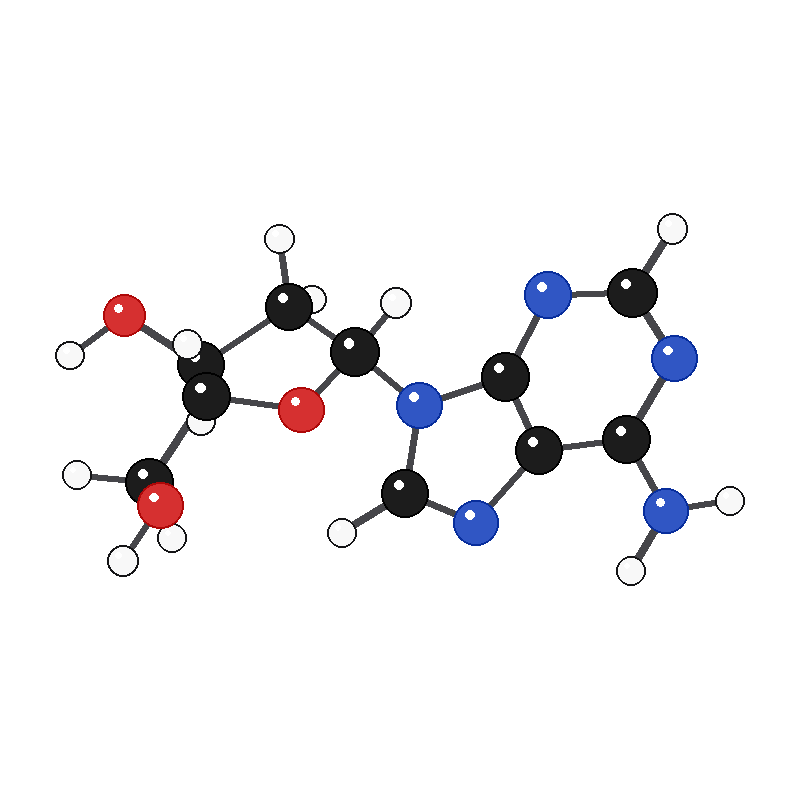
Shown: 2′-deoxyadenosine, one nucleoside found in PDRN’s DNA fragments. This is not the polymer.
Ingredient
PDRN (Polydeoxyribonucleotide)
One of the strongest 2026 regenerative-skincare trends, driven by Korean clinics, PDRN serums and 'salmon DNA' social buzz.
Category: Regenerative / K-Beauty
Chemical formula: Mixture of DNA fragments; no single molecular formula
Main cosmetic effects: Hydration; plumper-looking skin; supports a smoother, more resilient appearance.
Source: Traditionally purified DNA fragments from salmon/trout sperm; newer plant/biotech alternatives are emerging.
Developer / supplier: Developed from medical PDRN research; multiple Korean cosmetic suppliers
Origin: South Korea / Italy
Representative product: Medicube PDRN Pink Peptide Serum
Approx. retail price (USD): 25-35
Evidence maturity: Emerging topical evidence; strong marketing momentum
PDRN in Skincare: Benefits, Types, Products & What You Need to Know
PDRN has rapidly become one of the most talked-about ingredients in skincare. Once primarily associated with regenerative medicine and aesthetic treatments in South Korea, it is now appearing in serums, creams, eye treatments and masks from both K-beauty and global beauty brands.
But what exactly is PDRN, what does it do, and is topical PDRN skincare the same as injectable PDRN treatments?
Here is what consumers need to know.
What Is PDRN?
PDRN stands for polydeoxyribonucleotide, a mixture of DNA fragments traditionally obtained from purified salmon or trout DNA.
The ingredient has a history of use in regenerative medicine and has become particularly well known through aesthetic treatments in South Korea.
More recently, the beauty industry has adapted the PDRN concept for topical skincare.
Today, consumers can find PDRN in:
- Serums
- Moisturizers
- Eye creams
- Masks
- Ampoules
- Skin-repair-focused treatments
At the same time, newer plant-derived and biotechnology-produced alternatives are expanding what brands describe as PDRN skincare.
What Does PDRN Do for Skin?
PDRN is commonly associated with skin regeneration and repair.
Research into PDRN has explored biological mechanisms related to tissue repair, inflammation and cellular activity. This medical and aesthetic background has helped drive interest in PDRN as a cosmetic ingredient.
In skincare, brands commonly position PDRN products around benefits such as:
- Supporting healthier-looking skin
- Improving the appearance of elasticity
- Supporting the skin barrier
- Improving hydration
- Helping skin appear smoother
- Reducing the visible signs of aging
However, an important distinction needs to be made.
Evidence surrounding injectable or medically used PDRN should not automatically be applied to topical PDRN skincare.
A serum applied to the surface of the skin is fundamentally different from an injectable treatment.
The effectiveness of topical PDRN may depend on factors including its molecular characteristics, concentration, formulation and delivery system.
PDRN vs. PN: What Is the Difference?
PDRN and PN — polynucleotide — are closely related terms and are sometimes used loosely in beauty marketing.
Both involve DNA-derived materials, but they are not necessarily interchangeable.
In aesthetic medicine, polynucleotide treatments may use longer DNA chains, while PDRN generally refers to smaller DNA fragments.
Consumers researching treatments such as Rejuran may therefore encounter both terms.
For skincare products, it is worth checking exactly how a brand describes its ingredient rather than assuming every product labeled with PDRN or polynucleotides uses the same material.
Where Does PDRN Come From?
Traditionally, PDRN has been associated with DNA extracted and purified from salmon-family fish.
This is why terms such as “salmon DNA” or “salmon PDRN” frequently appear in discussions about the ingredient.
However, the cosmetic market is changing rapidly.
Several major beauty companies are now promoting alternatives described as:
Plant-derived PDRN
Some brands use DNA-related materials associated with botanical sources.
Biotech PDRN
Biotechnology and fermentation processes can be used to produce PDRN-related cosmetic ingredients without relying on traditional fish-derived sources.
Vegan PDRN
Brands increasingly use “vegan PDRN” to describe non-animal alternatives.
As these technologies develop, ingredient source is likely to become an increasingly important distinction within the PDRN category.
Salmon PDRN vs. Vegan PDRN
One of the biggest emerging questions is whether salmon-derived and vegan PDRN provide the same skincare benefits.
The answer is currently not simple.
Traditional PDRN has a longer research history, particularly in medical and regenerative applications.
Plant-derived and biotechnology-produced versions are newer within cosmetics and may differ in their molecular composition, manufacturing processes and supporting evidence.
This means consumers should avoid judging a product based solely on the word “PDRN.”
More useful questions include:
- What is the source of the PDRN?
- How was it produced?
- What concentration is used?
- What other active ingredients are included?
- Does the brand provide evidence for the finished formulation?
These questions will become increasingly important as more PDRN products enter the market.
Is PDRN the Same as Salmon Sperm?
Not exactly.
The viral phrase “salmon sperm skincare” is an oversimplification.
Traditional PDRN can be produced from highly purified DNA obtained from salmon-family reproductive cells. The resulting cosmetic or medical ingredient is processed and purified rather than simply being raw “salmon sperm.”
The phrase may attract attention on social media, but salmon-derived DNA or salmon-derived PDRN is generally a more useful description.
It is also increasingly inaccurate to describe the entire PDRN skincare category this way because many newer products use plant-derived or biotech alternatives.
PDRN Skincare vs. PDRN Injections
This is one of the most important distinctions consumers should understand.
Topical PDRN
PDRN skincare is applied to the skin through products such as serums, creams and masks.
These products are non-invasive and are generally marketed as part of everyday skincare routines.
Injectable PDRN or Polynucleotide Treatments
Professional aesthetic treatments deliver PDRN or related polynucleotide materials through injections.
Because the material is delivered into the skin rather than applied to its surface, the mechanism and supporting evidence cannot automatically be compared with topical cosmetics.
Consumers should therefore be cautious when skincare marketing references clinical outcomes from injectable treatments to imply equivalent results from a topical product.
Why Is PDRN Suddenly So Popular?
PDRN sits at the intersection of several major beauty trends.
K-Beauty
South Korea played a major role in bringing PDRN and polynucleotide treatments into global beauty conversations.
Skin Longevity
Consumers are increasingly interested in maintaining long-term skin health rather than simply targeting individual wrinkles.
Skin Barrier Care
The beauty market has been shifting from aggressive exfoliation toward products focused on hydration, recovery and barrier support.
Biotechnology
Fermentation and biotechnology are allowing cosmetic companies to explore new sources of traditionally animal-derived ingredients.
Social Media
TikTok and other platforms have accelerated consumer awareness of PDRN, particularly through discussions around Korean skincare and “salmon DNA” treatments.
Together, these trends have helped move PDRN from aesthetic clinics into everyday skincare.
Which Brands Use PDRN?
The category now includes both established K-beauty companies and major international beauty groups.
Brands associated with PDRN skincare include:
K-Beauty: Medicube, Rejuran, Anua, Genabelle and VT Cosmetics.
Global Beauty: L’Oréal Paris, Dior, Clinique, The Ordinary, Medik8 and Byoma.
PDRN has also begun moving into lower-priced mass-market skincare, signaling that the ingredient is no longer limited to premium products.
What Ingredients Work With PDRN?
Many PDRN skincare products combine the ingredient with established actives rather than using it alone.
Common combinations include:
PDRN + Hyaluronic Acid
Often used in products focused on hydration and plumper-looking skin.
PDRN + Niacinamide
Combines PDRN-focused skin support with an ingredient widely used for barrier care, uneven tone and oil control.
PDRN + Peptides
Fits particularly well with products positioned around firmness and skin-aging concerns.
PDRN + Centella Asiatica
A combination increasingly associated with soothing and skin-recovery-focused formulations.
PDRN + Vitamin C
Some products combine PDRN with vitamin C derivatives for products targeting radiance and visible signs of aging.
The overall formulation matters more than simply having the longest list of trending ingredients.
Is PDRN Safe?
Topical cosmetic products containing PDRN are generally very different from injectable treatments.
As with any skincare product, individual tolerance depends on the complete formulation rather than one ingredient alone.
Consumers with sensitive skin should introduce new active products gradually and follow the manufacturer’s instructions.
Those with known fish allergies may also want to check whether a PDRN product is fish-derived or uses a plant/biotechnology alternative and seek professional medical advice where appropriate.
Injectable PDRN or polynucleotide treatments should be considered separately from cosmetic skincare and discussed with an appropriately qualified healthcare professional.
How to Choose a PDRN Product
Instead of buying a product simply because “PDRN” appears on the label, look at the complete formulation.
Consider:
- PDRN source — salmon-derived, plant-derived or biotech?
- Product type — serum, cream, eye treatment or mask?
- Supporting ingredients — hyaluronic acid, niacinamide, peptides, Centella or other actives?
- Brand evidence — are claims based on the finished product or unrelated PDRN research?
- Your skincare goal — hydration, barrier support, visible aging or general skin maintenance?
- Price — expensive PDRN does not automatically mean better PDRN.
The Bottom Line
PDRN is evolving from a niche ingredient associated with Korean aesthetic medicine into a major global skincare trend.
Its rise has already expanded beyond traditional salmon-derived PDRN. Plant-derived, fermentation-produced and other biotech alternatives are creating an entirely new generation of PDRN skincare.
But consumers should keep one important distinction in mind:
PDRN skincare and injectable PDRN treatments are not the same thing.
As more brands enter the category, the most meaningful questions will increasingly be about the source, formulation, concentration, delivery technology and evidence behind each product — rather than simply whether the label says “PDRN.”
Cosmetics Daily tracks emerging cosmetic ingredients, product launches and beauty technologies. This guide will be updated as new research and PDRN products become available.
What it does
Hydration; plumper-looking skin; supports a smoother, more resilient appearance.
Notes
Regenerative / K-Beauty | Emerging topical evidence; strong marketing momentum