Breaking News
AI Is Changing How Consumers Discover and Buy Beauty Products
Artificial intelligence is reshaping the way consumers discover, compare and purchase beauty products, as major technology platforms and cosmetics companies invest in conversational shopping, personalized recommendations and automated advertising.
Recent developments from TikTok and L'Oréal suggest that the beauty shopping journey could increasingly move beyond traditional keyword searches and product listings toward AI-assisted conversations.
For skincare and cosmetics brands, the shift raises an important question: Will the next beauty purchase begin with a search engine, a social media video or an AI assistant?
TikTok Introduces AI-Powered Shopping and Advertising Tools
On October 5, 2026, TikTok announced a series of AI-powered advertising and commerce tools at Advertising Week New York.
Among the most significant developments are Shopping Assistant, Buy Direct and new automated advertising capabilities.
Shopping Assistant is designed to guide consumers through product discovery using conversational AI. According to TikTok, the assistant can interpret shopping needs and provide information about products, availability, shipping and purchasing.
Buy Direct aims to simplify transactions by allowing shoppers to purchase directly from participating brands without leaving TikTok.
For beauty consumers, these developments could eventually make it easier to find products based on individual preferences, budgets and specific skincare concerns.
However, these capabilities are being introduced and developed progressively; their availability should not be assumed across every market.
L'Oréal and OpenAI Explore AI-Powered Beauty Shopping
TikTok is not the only company investing in AI-driven commerce.
In June 2026, L'Oréal announced a collaboration with OpenAI focused on transforming consumer experiences and business operations through artificial intelligence.
One initiative involves bringing Maybelline New York's virtual makeup try-on experience into ChatGPT, using L'Oréal's ModiFace technology.
The initiative illustrates how beauty discovery could evolve from browsing product catalogs to asking conversational questions and exploring makeup looks through AI-assisted experiences.
Instead of searching separately for lipstick shades, foundation recommendations and makeup tutorials, consumers may increasingly expect digital assistants to help them navigate multiple stages of product discovery.
From Keyword Search to Conversational Beauty Discovery
Traditional online beauty shopping often begins with short search phrases such as "best vitamin C serum" or "foundation for dry skin."
Conversational AI introduces a different interaction.
A shopper might ask:
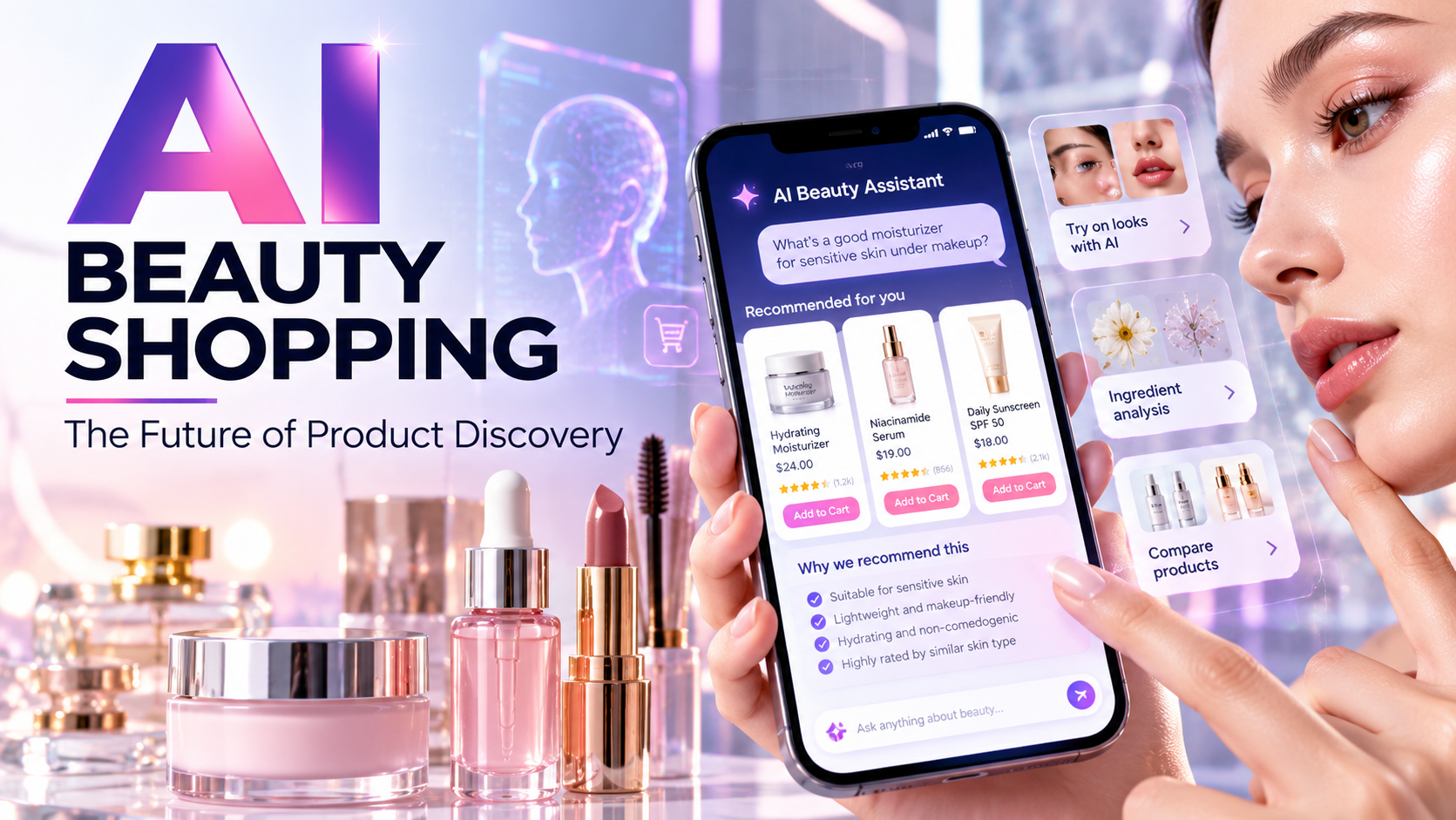
"What is an affordable fragrance-free moisturizer for sensitive skin that works well under makeup?"
Such questions contain multiple preferences, including price, formulation, skin concerns and intended use.
AI-powered shopping systems may be able to interpret these requirements and help consumers narrow their choices.
For beauty brands, this could increase the importance of accurate product information, ingredient transparency and clearly described product benefits.
However, AI-generated recommendations can also be incomplete or inaccurate, particularly when product data is outdated or claims are insufficiently verified.
AI Is Transforming Beauty Advertising
TikTok's latest announcement also includes improvements to Smart+, its AI-powered advertising system.
New capabilities include automated search advertising, creative selection and expanded optimization for TikTok Shop campaigns.
The platform is also developing tools that allow advertisers to integrate AI agents into campaign management workflows.
These developments could reduce some of the manual work involved in creating, testing and optimizing digital advertising campaigns.
For emerging beauty brands, AI-powered tools may make it easier to experiment with different messages, product visuals and audiences.
Yet automation does not guarantee profitability. Advertising performance still depends on product quality, pricing, customer reviews, creative effectiveness and campaign economics.
What Does This Mean for Amazon and Independent Beauty Brands?
As AI-assisted product discovery expands, beauty brands may need to reconsider how they present products across websites, marketplaces and social platforms.
Detailed product descriptions, complete ingredient lists, accurate product images and credible customer feedback could become increasingly valuable.
For example, a skincare brand selling an azelaic acid serum may benefit from clearly explaining its ingredient concentration, texture, intended cosmetic benefits and compatibility with different routines.
Similarly, brands selling fragrance or makeup products may need richer information about scent profiles, finishes, shades and product experiences.
The opportunity is not simply to insert more keywords into product pages.
Instead, brands may need to make product information easier for both consumers and AI-powered shopping systems to understand.
Why It Matters for the Beauty Industry
The emergence of conversational shopping could influence the beauty industry in three important ways.
First, product discovery may become more personalized. Consumers could increasingly search for products using detailed questions rather than generic keywords.
Second, competition may shift toward information quality and credibility. Brands with accurate product data, transparent claims and strong consumer trust may be better positioned to compete.
Third, the relationship between content and commerce may become closer. Social videos, AI recommendations, product reviews and checkout experiences could increasingly operate within connected shopping journeys.
These changes also create challenges involving recommendation bias, privacy, advertising transparency and the reliability of AI-generated advice.
The Future of AI-Powered Beauty Commerce
AI is unlikely to eliminate traditional search engines, beauty retailers or human creators in the near future.
Instead, it may add another layer to the shopping experience, helping consumers move between inspiration, research, product comparison and purchasing.
For beauty brands, the strategic priority is to prepare for a market where customers may discover products through several different interfaces.
The brands that succeed may be those that combine trustworthy product information, compelling creative content and genuinely useful consumer experiences.
As TikTok, L'Oréal and other companies continue developing AI-assisted shopping capabilities, the beauty industry's approach to product discovery and digital marketing is likely to keep evolving.