Breaking News
China’s Beauty Market Recovery Brings New Opportunities for L’Oréal and Estée Lauder
October 18, 2026 | Beauty Industry News
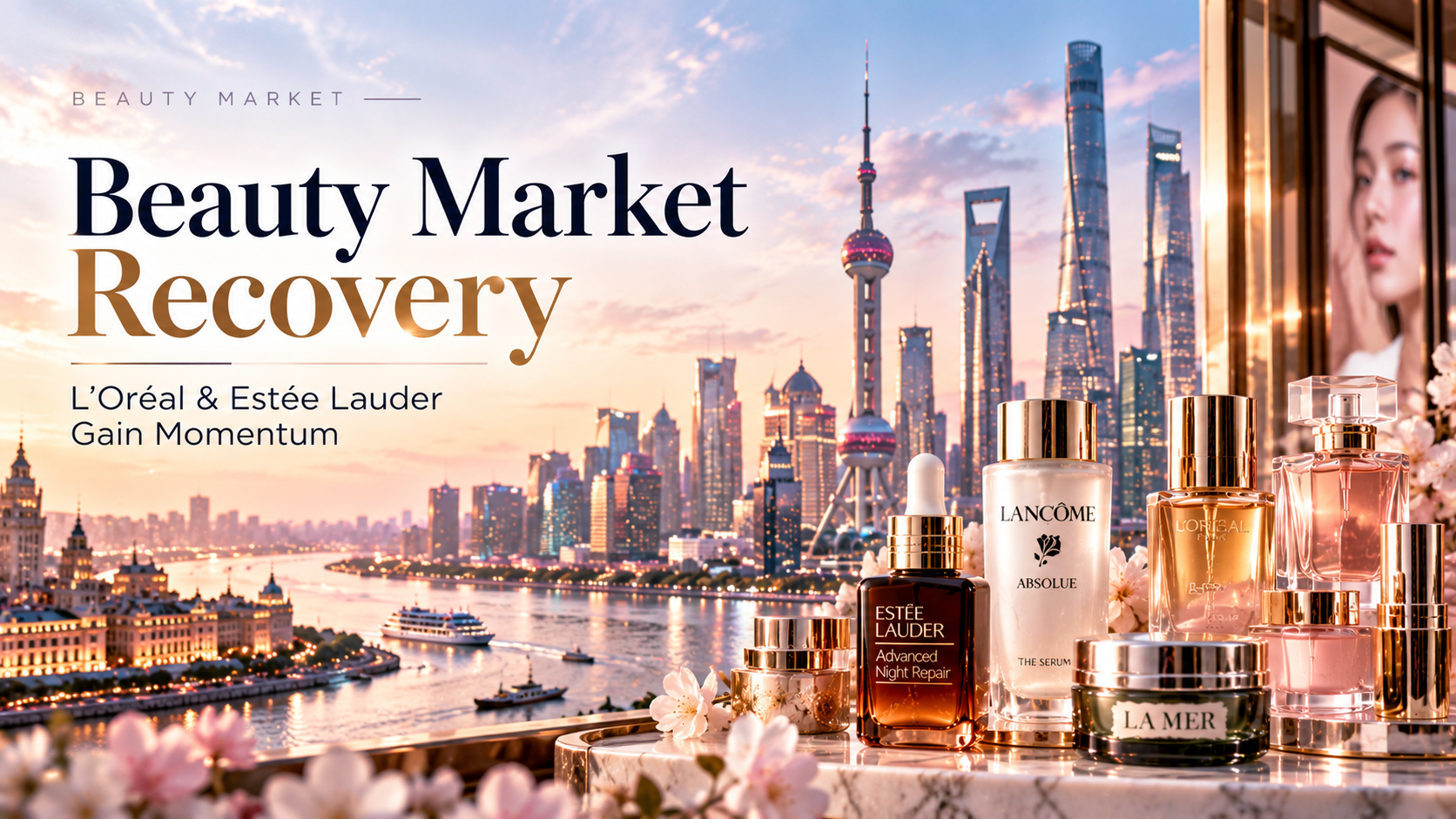
China's premium beauty market is showing signs of recovery, providing fresh momentum for international cosmetics companies including L'Oréal and The Estée Lauder Companies.
An October 15 report highlighted improving performance among major foreign beauty brands, supported by demand for prestige skincare, fragrances and more localized marketing strategies.
However, the recovery remains uneven. Chinese consumers are still cautious about discretionary spending, while competition from domestic beauty brands continues to intensify.
For global cosmetics companies, China remains a critical market — but success increasingly depends on innovation, digital commerce and understanding local consumers.
Estée Lauder Reports 9% Growth in Mainland China
The Estée Lauder Companies reported a 9% increase in organic net sales in mainland China for fiscal 2026, which ended on June 30.
Reported sales in the market reached approximately $3.06 billion, compared with $2.74 billion in the previous fiscal year.
The company also reported market share gains in prestige beauty, supported by skincare, makeup and fragrance brands.
Its portfolio includes Estée Lauder, La Mer, Jo Malone London, TOM FORD and other internationally recognized beauty names.
Fragrance was particularly strong, while skincare and makeup also contributed to the company's recovery.
The results suggest that established international brands can still attract Chinese consumers when they offer compelling products and differentiated brand experiences.
L'Oréal Sees Stronger Demand for Premium Beauty
L'Oréal also reported improving business conditions in China during the first half of 2026.
According to its half-year financial results, North Asia recorded 4.6% adjusted like-for-like sales growth, with China serving as a key contributor.
The company said its luxury beauty division benefited from double-digit growth in China, supported by product innovation and demand for premium skincare.
Brands including Helena Rubinstein, SkinCeuticals and the Chinese beauty brand Yue Sai contributed to the group's performance.
L'Oréal also reported strong growth in dermatological beauty and professional products, highlighting consumer interest in specialized skincare and performance-oriented products.
China's Beauty Consumers Are Becoming More Selective
The recovery does not necessarily mean Chinese consumers are returning to previous spending patterns.
Economic uncertainty, competition and greater access to product information have made purchasing decisions more selective.
Consumers increasingly evaluate products based on their perceived effectiveness, ingredient quality, brand reputation and value.
For prestige beauty brands, premium pricing alone may no longer be enough to secure consumer loyalty.
Brands must demonstrate why their products deserve a place in consumers' skincare and makeup routines.
This creates opportunities for companies investing in distinctive formulations, product research and consumer education.
Domestic Chinese Beauty Brands Remain Strong Competitors
International cosmetics groups also face increasingly sophisticated competition from local Chinese beauty companies.
Domestic brands have developed stronger capabilities in product formulation, packaging, digital marketing and rapid product development.
Their familiarity with local consumer preferences can provide an advantage in identifying emerging trends.
For international brands, localization is therefore becoming more important.
Successful strategies may include locally relevant product development, partnerships with domestic platforms and marketing tailored to Chinese consumer behavior.
L'Oréal's performance with Yue Sai illustrates the importance of combining global resources with local market knowledge.
E-Commerce Continues to Shape Beauty Sales
Digital commerce remains central to China's beauty market.
L'Oréal reported that e-commerce represented more than half of its sales in North Asia during the first half of 2026.
Major shopping platforms, livestreaming, short-form video and online beauty communities continue to influence how consumers discover and compare products.
For beauty brands, this means product information, online reputation and digital storytelling are increasingly important.
The ability to communicate product benefits clearly across multiple online channels can help brands reach consumers who are researching purchases more carefully.
Luxury Beauty Recovery Remains Uneven
Despite encouraging results from L'Oréal and Estée Lauder, the broader luxury market continues to face challenges.
LVMH's third-quarter 2026 results highlighted weakness in Chinese luxury consumption, particularly in fashion and leather goods.
This contrast suggests that demand for prestige cosmetics and skincare may follow a different trajectory from spending on expensive fashion accessories.
Beauty products generally require a smaller financial commitment than luxury handbags or watches, although premium cosmetics remain discretionary purchases.
The differing results also show why developments in China's luxury market should not automatically be treated as representative of every beauty category.
Why It Matters for the Beauty Industry
China's beauty market recovery offers several important lessons for global cosmetics companies.
First, premium skincare remains an important growth opportunity. International brands with established reputations and strong product innovation can continue to compete for consumers.
Second, localization is increasingly essential. Understanding Chinese consumer preferences, shopping platforms and product expectations can be as important as global brand recognition.
Third, digital commerce is central to market performance. Brands need to combine effective online distribution with credible product information and engaging content.
Fourth, recovery does not eliminate competitive pressure. Domestic brands, cautious spending and changing consumer expectations will continue to shape the market.
What Comes Next for China's Beauty Market?
The next major test will be the year-end shopping season, including China's Singles' Day promotions in November.
These campaigns could provide additional insight into consumer demand for premium skincare, fragrance and makeup.
For L'Oréal, Estée Lauder and other global beauty companies, China remains both an important growth opportunity and a highly competitive market.