Breaking News
Eye Patch Gate Sparks Debate Over Innovation in the Beauty Industry
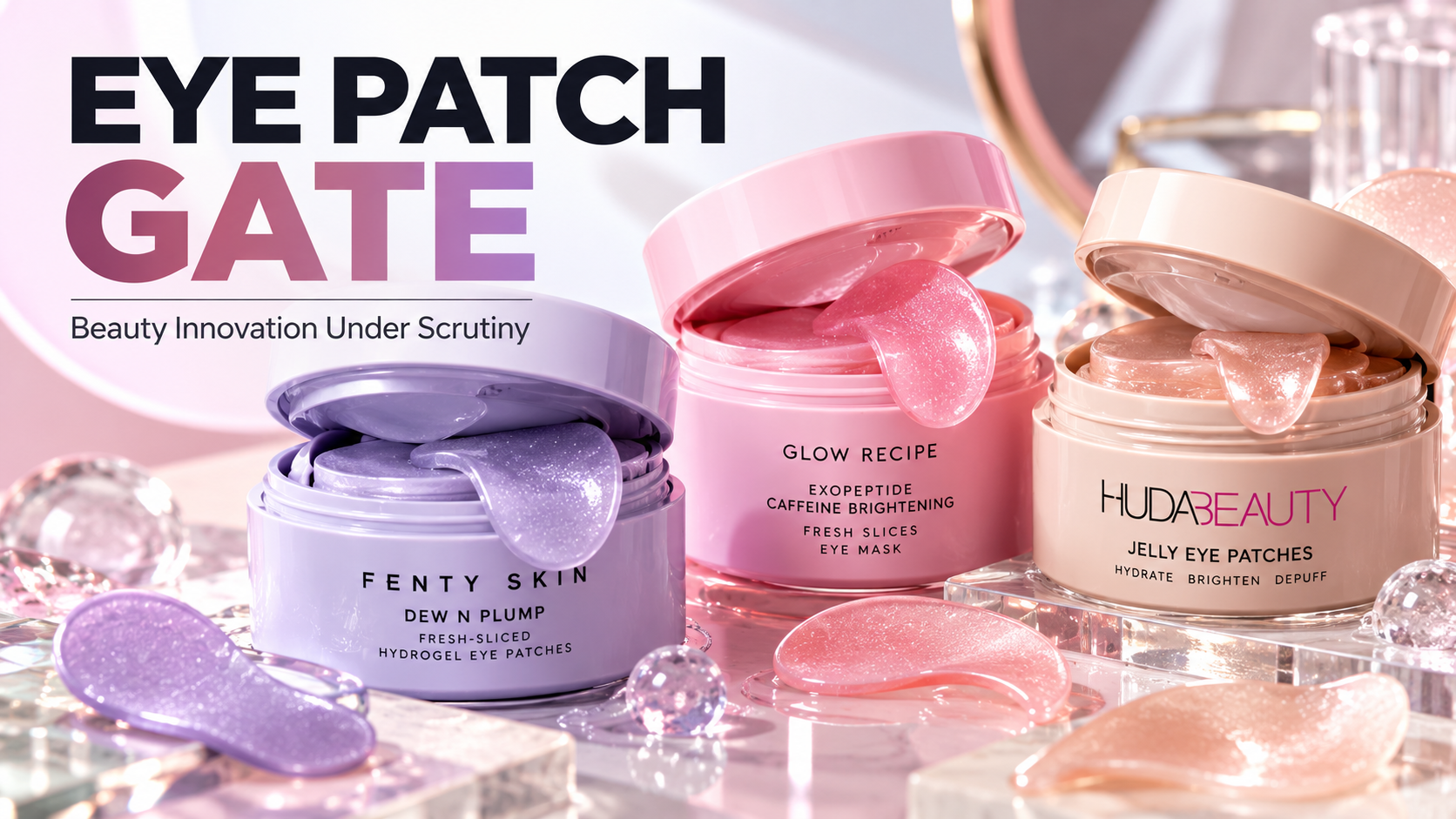
A wave of nearly identical under-eye patch packaging from Fenty Skin, Glow Recipe and Huda Beauty has sparked a wider debate about innovation, originality and product differentiation in the global beauty industry.
The controversy, widely referred to as “Eye Patch Gate,” began in September when several beauty brands revealed similar twist-to-dispense hydrogel eye patches within days of one another.
On October 5, Vogue revisited the controversy, raising a broader question: Is the beauty industry investing enough in meaningful innovation?
What Happened in Eye Patch Gate?
The controversy began when Fenty Skin introduced its Dew N Plump Fresh-Sliced Hydrogel Eye Patches, featuring a cylindrical dispenser designed to deliver freshly sliced hydrogel patches.
Glow Recipe subsequently revealed its Exopeptide Caffeine Brightening and Depuffing Fresh Slices Eye Mask, featuring a remarkably similar dispensing mechanism.
Huda Beauty also previewed under-eye jelly patches using a comparable packaging format.
The similarities quickly attracted attention on TikTok and Instagram, where beauty consumers questioned how several major brands had developed such similar packaging concepts.
Korean beauty brand Wonder Bath had also introduced a related slicing-style eye patch format earlier in 2026.
Similar Packaging, Different Formulas?
Although the products appear similar, the available evidence does not establish that their formulations are identical.
Glow Recipe has emphasized that its eye patches were developed with a distinct formulation containing ingredients such as exopeptides, caffeine and panthenol.
The controversy therefore raises an important distinction between packaging innovation and formulation innovation.
Brands may use similar packaging components supplied by external manufacturers while developing different skincare formulations, ingredient combinations and product experiences.
For consumers, however, nearly identical packaging can make it difficult to recognize meaningful differences between competing products.
How Beauty Brands Responded
Rather than escalating the controversy, several brands responded with humor on social media.
Fenty Skin shared a playful illustration referencing the viral Spider-Man pointing meme, while Glow Recipe joined the conversation with its own humorous content.
The responses helped transform a potentially uncomfortable product comparison into a widely discussed beauty marketing moment.
The episode demonstrates how social media can rapidly turn packaging similarities into a global conversation about brand identity and originality.
Consumers Are Demanding More Innovation
The controversy comes at a time when beauty consumers are becoming increasingly knowledgeable about skincare ingredients, product formulations and manufacturing practices.
Consumers can now compare ingredient lists, research active ingredients and identify packaging similarities across brands more easily than ever.
As a result, marketing claims such as “revolutionary,” “exclusive” or “first-of-its-kind” may face greater scrutiny.
Beauty brands are increasingly challenged to demonstrate meaningful differentiation through product performance, formulation technology, packaging functionality and consumer experience.
Why It Matters for the Beauty Industry
Eye Patch Gate highlights several important lessons for beauty brands and manufacturers.
First, packaging innovation alone may not provide lasting differentiation. If similar packaging components are available to multiple brands, competitors can introduce comparable products within a short period.
Second, formulation development is becoming more important. Brands that invest in distinctive ingredients, testing and product performance may be better positioned to establish long-term credibility.
Third, consumers are playing a greater role in evaluating innovation. Social media allows customers to compare products immediately and challenge marketing claims.
Finally, the controversy shows that even unexpected product similarities can generate significant brand visibility when companies respond creatively.
The Future of Beauty Product Innovation
The next generation of beauty innovation may depend less on eye-catching packaging alone and more on the combination of science, product performance and meaningful consumer benefits.
For emerging beauty brands, Eye Patch Gate serves as a reminder that successful product development requires more than identifying a viral trend.
True differentiation comes from offering consumers a compelling reason to choose one product over another.
As the beauty market becomes increasingly competitive, the balance between innovation, affordability and authenticity will remain an important factor in brand success.