Breaking News
Fake Beauty Products Found With Mercury, Lead and 80% Methanol in UK Safety Tests
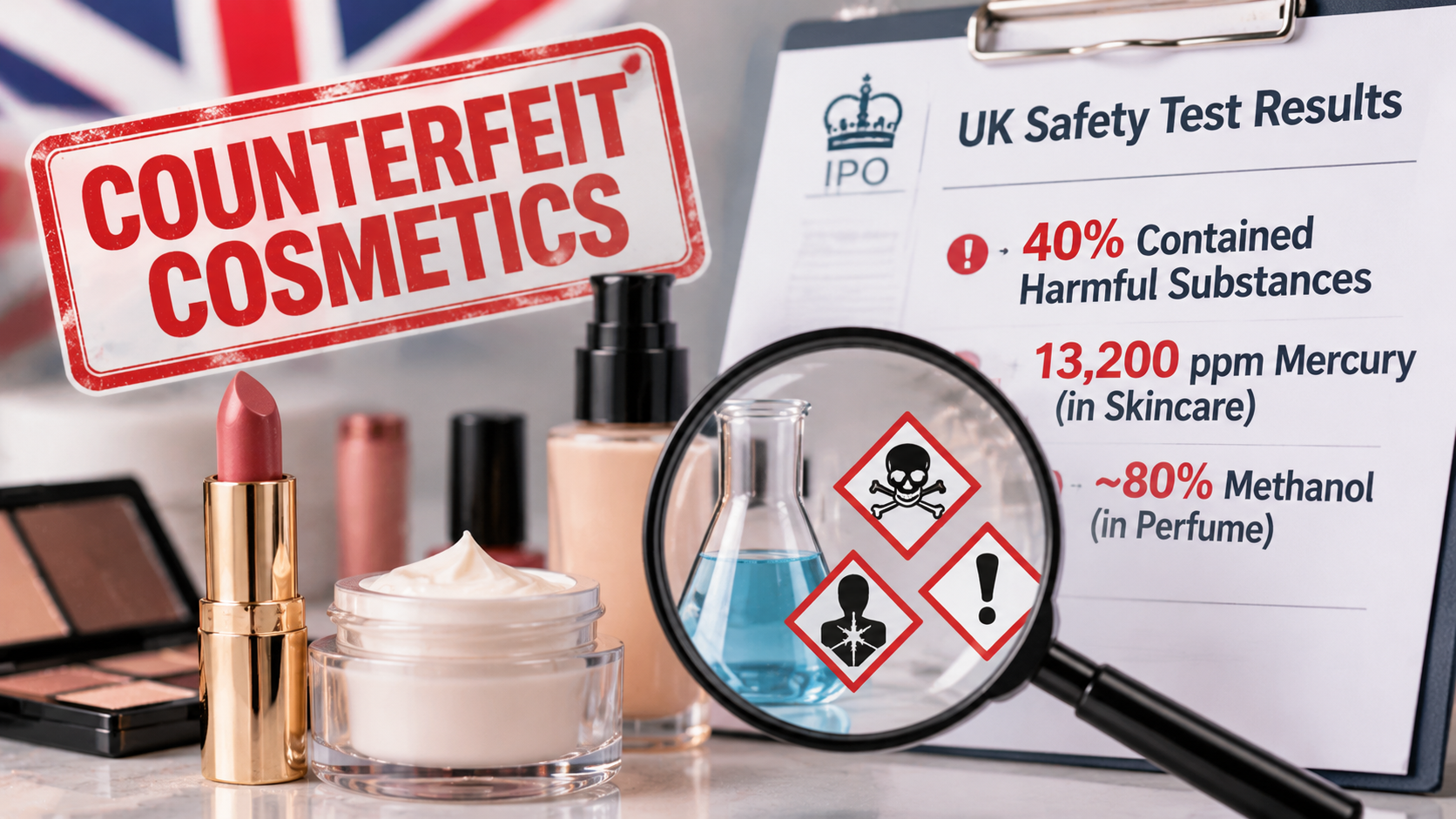
Counterfeit beauty products seized in the UK have been found to contain potentially harmful substances, including mercury, lead, nicotine and methanol. In testing conducted by Trading Standards, 20 out of 50 seized counterfeit cosmetics failed safety checks, with one fake skincare product containing 13,200 parts per million of mercury and a counterfeit fragrance made up of approximately 80% methanol.
The findings were highlighted by the UK Intellectual Property Office (IPO) on November 2, 2026, as part of its “Face the Fakes” campaign, which aims to warn consumers about the risks of counterfeit cosmetics, skincare and fragrance products.
What Was Found in the Counterfeit Beauty Products?
Trading Standards tested a cross-section of 50 counterfeit beauty products seized during enforcement activity. The products included skincare, makeup and fragrance.
The official findings revealed several concerning substances:
These findings show that counterfeit beauty products can contain substances that are prohibited or potentially harmful, even when their packaging looks similar to genuine products.
More Young Consumers Are Knowingly Buying Fake Beauty Products
The safety findings come as the UK reports a rise in intentional purchases of counterfeit beauty products among younger shoppers.
According to the IPO's Counterfeit Goods Tracker, 20% of consumers aged 18 to 24 who bought beauty products in 2025 admitted knowingly purchasing counterfeit products. That compares with 6% in 2023, more than tripling in two years.
Online shopping is also a major concern. Nearly three in four consumers who purchased counterfeit cosmetics and toiletries said they bought them online, highlighting the importance of checking sellers on marketplaces and social media platforms.
Beauty products, including cosmetics, skincare and perfume, are now among the ten most commonly investigated categories of counterfeit goods by Trading Standards.
Why Fake Cosmetics Can Be Dangerous
Unlike legitimate beauty products sold in the UK, counterfeit cosmetics may bypass required safety assessments, ingredient controls and manufacturing standards.
The risks are not limited to visible skin reactions. According to the IPO's campaign materials, substances such as mercury and lead can affect the body's internal systems, and some effects may not be immediately noticeable.
Methanol presents another serious concern. Exposure can cause severe poisoning, including damage to the nervous system and eyesight.
Because counterfeit products can look convincing, consumers cannot reliably identify their contents or safety simply by examining the packaging.
How to Avoid Buying Counterfeit Beauty Products
The IPO's “Face the Fakes” campaign recommends several precautions when shopping for makeup, skincare and fragrance:
The IPO advises consumers to look beyond product photos and online reviews and verify who is actually selling the item.
A Growing Beauty Safety Concern
The UK findings highlight a consumer safety issue that extends beyond counterfeit luxury makeup. Fake skincare, makeup and fragrance can expose shoppers to substances they would not expect to find in everyday beauty products.
With one in five young adult beauty shoppers surveyed admitting to knowingly buying counterfeit products in 2025, the IPO's campaign is urging consumers to pay closer attention to where their beauty products come from.
For shoppers, the key message is simple: a familiar-looking package or a low price does not guarantee that a beauty product is genuine or safe.